
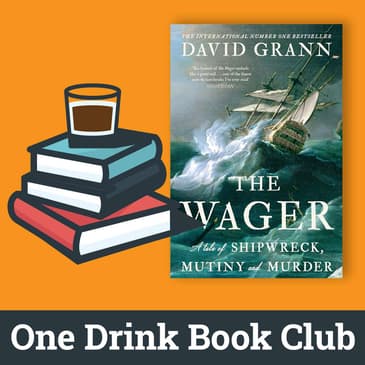
In this episode, Jamey discusses The Wager, A Tale of Shipwreck, Mutiny and Murder by David Grann. This New York Times bestselling book tells the true story of a British Naval ship that wrecks off the coast of Chile in the 1700s. It’s a tale of death, destruction, betrayal, and survival. His guest is Dan Perry who is an avid reader and collector of books as well as an author in his own right.
[00:00:00] Welcome to the One Drink Book Club.
[00:00:09] Tonight we are going to be discussing The Wager, a tale of shipwreck mutiny and murder by David
[00:00:14] Gran.
[00:00:15] The book tells the true story of a British naval ship that wrecks off the coast of Chile
[00:00:19] in the 1700s.
[00:00:21] It's a tale of death, destruction, betrayal and survival.
[00:00:25] My guest tonight is my friend Dan Perry who is an avid reader and collector of books
[00:00:30] as you can see from his background if you're watching the video version of this and is
[00:00:34] an author in his own right.
[00:00:36] Welcome Dan.
[00:00:37] Welcome, thanks you very much Jamey.
[00:00:40] This has been a trip.
[00:00:42] Glad to be here.
[00:00:44] Well it was a great book and it was a suggestion that you made to me at the Super Bowl.
[00:00:50] We were watching the Super Bowl together and you said hey if you're looking for a
[00:00:53] good book I've got one for you.
[00:00:55] So I thought it was fantastic and for those who haven't read the book it's a true
[00:01:01] story and it's really impeccably researched by the author.
[00:01:07] But Dan why don't you give a little bit of an overview of what happens?
[00:01:09] I don't think we can do any spoilers because it already all happened and I think the real
[00:01:14] interesting part of this is how it all happens.
[00:01:17] It's the details that really are the fascinating part.
[00:01:20] So but why don't you give the overview of what this was about?
[00:01:24] I can do that or we can start and talk about the drink.
[00:01:28] Well we can sir.
[00:01:29] All right.
[00:01:30] Yes, I'd like to talk about the drink.
[00:01:31] The juice is the one Frank Book Club isn't it?
[00:01:33] I mean why go dry?
[00:01:35] Sure, what are we waiting for?
[00:01:37] Well go ahead.
[00:01:39] What did you make tonight?
[00:01:41] So what I have is the painkiller which given the ordeals that we will learn about in
[00:01:50] reading the wager they certainly could have used a painkiller and a painkiller is
[00:01:57] actually a trademark name of this company, Pussard Royal British Navy Robe.
[00:02:08] Pussards we got to be careful with that pronunciation but they bought the recipe
[00:02:14] from the British Navy in 1979.
[00:02:18] But the history of it is that going back to 1633 when the Brits invaded Jamaica
[00:02:25] and discovered that the locals were making rum, they started allotting a half pint of rum a day
[00:02:34] to all midshipmen.
[00:02:36] And this was a great British tradition that lasted until the late 1970s although they
[00:02:43] started watering it down because British rum was proofed at 110 proof and they were
[00:02:52] serving their handing out half pints a day and you know there were a lot of schnockered sailors
[00:03:00] so over the decades they started mixing it with water, lime juice and sugar.
[00:03:06] So we've got the beginnings of margaritas and dackeries and all kinds of things going on.
[00:03:12] But the rum itself I found this fascinating it's the only alcohol that we consume that
[00:03:18] actually was a byproduct of industrial waste.
[00:03:23] I did know that, I've read...
[00:03:25] You would know that of course.
[00:03:27] Well no but because the molasses and from the sugarcane in the sugarcane production.
[00:03:34] Exactly and from that we get rum and then we've got British royal rum and all of that leads to
[00:03:40] a painkiller which is two ounces of rum or a little more if your wrist kind of shapes a little bit.
[00:03:50] Four ounces of pineapple, one of fresh squeezed orange juice, one of cream of
[00:03:57] coconut shaken with ice dusted with nutmeg and they ask for it to be garnished with
[00:04:06] orange but since we're going to be talking later about scurvy I thought a lime made much more sense.
[00:04:13] I think that's a perfect drink.
[00:04:16] We were in St John over the holidays this year and had many a painkiller and they are a delicious
[00:04:23] drink. There you go, good for you.
[00:04:26] Very enjoyable and so you went with something I had a feeling you were going to go very
[00:04:32] British Navy with the drink so I tried to go something a little bit different than that
[00:04:39] and what I researched was cocktails popular in the Patagonia region and in South America
[00:04:47] and what I found was a drink called the Patagonian cliffhanger which I thought was a great name
[00:04:54] for this book because as you were reading it you weren't quite sure what was going to happen.
[00:04:59] It had a lot of cliffhangers and so the Patagonian cliffhanger is made of two ounces of tricale which
[00:05:09] is an Argentinian liqueur that's made from Patagonian apples so it's kind of an apple-y flavor
[00:05:17] and then one ounce of aparol, a half ounce of fresh lime juice, half ounce of agave nectar
[00:05:24] and two dashes of orange bitters. Brilliant, brilliant. Jamie you are you're a master at this so
[00:05:33] I bow down. Oh well I it's tasty but probably not as tasty as your painkiller because they hold a
[00:05:42] special place in my heart those painkillers. Anyway so back to the story let me just the
[00:05:49] synopsis a little bit. First of all David Graham those of you who read as I know you did Jamie
[00:05:56] Killers of the Flower Moon were back with that same author he tells a story that who knew these
[00:06:04] things happened and yet so it's fresh new to us the reader and with the detail and the
[00:06:13] versimilitude if I can use that word of the times it comes to life a fabulous read Killers of the Flower
[00:06:22] Moon obviously made into a movie with Martin Scorsese and Leonardo DiCaprio guess what the
[00:06:30] wager is now in production again Scorsese and DiCaprio so look for it in a some several months
[00:06:40] or a year but read the book first because as the old cliche is the book is where the action is and
[00:06:48] in this case that goes double. I would think so there's so much great background in tidbits about
[00:06:54] the time about the navy about how all of this worked in the 1940s when this occurred that I
[00:07:02] think you'll get snippets of it in a movie but there's just not enough time to know all
[00:07:08] that and so definitely agree that you need to read the book first and he does such a fantastic job
[00:07:16] of turning something that is a nonfiction historical relaying of the tale but in a way
[00:07:24] that almost reads like a novel and you really feel like you get to know the characters
[00:07:29] the personalities and it has kind of separate parts about how this all happened there's
[00:07:36] the whole lead up before the ships leave there's the journey itself the shipwreck and then the ensuing
[00:07:44] situation on land and how they deal with that all of that stuff just is gripping and it you feel
[00:07:50] like it is something that is written out of somebody's imagination a great storyteller
[00:07:56] and it's fascinating to find out that it's true. Yes yes and there is a suspense to it
[00:08:02] even as these are things that happened 300 years ago we are you're literally hanging on
[00:08:08] find out what's going to happen next because there are switchbacks there are things that go back
[00:08:14] and forth that you can't imagine anyway so back to the synopsis Graham opens the book with its
[00:08:24] 1740s southeast coast of Brazil people see this thing out on the horizon it's floating toward
[00:08:33] the coast as it gets closer they see it's some kind of a boat but the mass have been broken the
[00:08:42] sails are shredded it's leaking it's kind of part raft and part boat and when it gets to
[00:08:50] land outpours 30 men shrunken to the bones bug-eyed hair matted these are men that have gone through
[00:09:02] some kind of hell and they relate that they are the last survivors of a british man of war
[00:09:11] that sailed from portsmouth england two a year and a half earlier had thought to have been lost
[00:09:19] going around the cake horn and now here they you know come in on this this raft and people are
[00:09:27] amazed that they could still be alive 50 of them had died on the way just getting in on this raft
[00:09:35] and they're hailed as heroes they are the survivors of a terrible tragedy that's happened
[00:09:41] to the british navy well that right there would have made a pretty gripping nautical
[00:09:47] story right up there with hattrick o brian and uh and all of the rest but that's just half of it
[00:09:55] because six months after this leaky raft pulls ashore on the southeast shore of brazil another
[00:10:03] boat basically a dugout with three englishmen aboard appears in peru on the other side of
[00:10:13] the continent and it's the captain of the ship and a couple of the men that are loyal to him
[00:10:19] and they say that the first guys are not heroes they're scoundrels they're mutineers they have
[00:10:27] violated the most basic laws of england and of the navy well in time both stories end up back
[00:10:35] in london and now they're pitted against one another in front of a very formal court
[00:10:41] marshal of the british admiralty that charges our mutiny murder anibalism it the whole thing spills out
[00:10:52] and for the people of the day this is a true crime of the uh the eight eighth century story
[00:10:59] that you know it's really kind of got lost in the uh mists of history ever since and now
[00:11:07] graham has put it into this novel well and we're lucky that it did go to a court marshal because
[00:11:13] one of the things that a court situation like this provides is the legal records of it and so
[00:11:21] the depositions and the witnesses and several of the people who survived this wrote down their
[00:11:27] tales some of them actually had uh log books that they kept throughout the entire journey
[00:11:34] throughout the shipwreck time and i cannot believe that these things survived and that grand was able
[00:11:41] to get those and you know comb through them and ferret out the story i can't imagine the kind of
[00:11:48] analysis you'd have to do not only to read the script because this was all hand written
[00:11:53] but then to also interpret the you know terms of the day and the way that the writing style was
[00:12:00] and everything else really interesting well not only were there log books and and evidence that
[00:12:07] was put in before the court marshal but books were written about this including by some of the
[00:12:13] survivors one of them the first one to get back to england john bulkley who was the gunner
[00:12:21] and therefore had access to the stores of all the armament on the original ship
[00:12:27] he's the one that landed his men in brazil and he wrote a
[00:12:35] scandalous book about his daring due in going back and forth through the straits of magellan
[00:12:43] where the pacific and the atlantic meet and it's like a funnel and the the fastest and longest
[00:12:51] current in the world and how they navigated all of this and bulkley wrote this book claiming of
[00:12:57] course to be a hero and his men to be heroes and that had been in circulation in england for years
[00:13:04] before the captain got there to tell his side of the story the interesting thing is that
[00:13:12] and i won't give away the twist at the very end about how the uh how the ruling faith finally
[00:13:19] came down between the duly narratives here but it's almost beside the point the essence was
[00:13:28] the ordeal that they all went through when they were shipwrecked on wager island as they called
[00:13:36] it by the way that's the name of the original british man of war a class six square-masted
[00:13:44] man of war named hms his majesty ship wager they ended up on this island and then almost
[00:13:52] immediately divided into camps there was uh those that accused the captain of having screwed things
[00:13:59] up so badly that left them there there was the other side that said that there was a mutiny
[00:14:04] going on and and then they just went the war back and forth and some tried to get out one way
[00:14:11] and others tried to get out another way but it's the ordeals that david grand the author
[00:14:18] details so much the starvation the winds the cold the currets the treacherous conditions there at
[00:14:28] tiara del fuego at the very tip of south america that's what the reader will not soon forget
[00:14:37] yeah you know it really turned into kind of a lord of the flies situation where you had a bunch of
[00:14:44] desperate men who were unbelievably hungry uh first of all but then were lacking everything
[00:14:50] they lacked shelter they lacked any of the creature comforts even even as minuscule as they were
[00:14:56] on a british man of war they were really stuck out there with nothing but that is
[00:15:03] before they even get to the shipwreck situation the voyage from britain to where they ended up in
[00:15:10] south america that was pretty horrible we referenced scurvy and the boat got that it got some sort of
[00:15:18] viral disease and at the time they're really the ship had a surgeon so a doctor but pretty much he
[00:15:26] was only good for amputating things i mean they they had no knowledge of how to fix any of
[00:15:31] this and i really didn't realize what scurvy did so scurvy without enough vitamin c the collagen in
[00:15:40] your body ceases to be made and so collagen kind of binds all your joints it kind of lubricates
[00:15:46] all your joints and so you get this painful painful arthritis but then like your teeth start
[00:15:54] falling out like collagen makes a big deal and it starts to affect your brain and how you're
[00:15:58] thinking and so people really just kind of waste away and it was amazing to me i did a little research
[00:16:05] and there was a naval surgeon that basically figured out that vitamin c lemons and and limes
[00:16:15] really was a great way to combat scurvy in like 1753 he discovered that but it wasn't
[00:16:22] implemented as a policy of the british navy until 1795 i mean 40 years later almost before they actually
[00:16:32] made sure there were lemons and limes on the ships to keep people healthy
[00:16:37] one of the things that i love about any book but especially in historical fiction
[00:16:42] is what i'm learning things and i like you i've heard about scurvy and semen and high seas and
[00:16:51] how limes eventually saved it and that's why the brit circle called limies as a slur
[00:16:59] but i didn't know what scurvy was i thought it was like a skin disease yeah no you're right
[00:17:05] it was horrific he said that bones that had been mended and these men started dissolving and
[00:17:13] breaking away again and all of their connective tissues deteriorating that yeah the teeth falling
[00:17:21] out the skin turns blue and and that they died from respiratory distress because their lungs
[00:17:29] that no longer could function wow so that's scurvy that was just one of the things
[00:17:35] that i learned about it i also learned much more vividly about press gangs even before
[00:17:43] they they sail the practice of ships captains needing crew and you know not finding a lot of
[00:17:54] always men you know who had any kind of experience so they started they got groups of armed men got
[00:18:02] prowl the waterfront bars and the alleyways and along the roads and anybody wearing a
[00:18:09] certain kind of checkered shirt or pants with wide knees uh this guy's we're good that is
[00:18:16] staying hands their their hands were stained with tar yeah there he had tar on their finger
[00:18:23] because then the the semen were called tar's because they were always patching things to tar
[00:18:28] because it was waterproof and even ships that were coming back from long voyages you know here's
[00:18:35] their their wives and families on on shore welcome home no no the press crews went out and grabbed them
[00:18:42] put on another ship and off they went yeah it was unbelievable and it was a legal practice yeah yeah
[00:18:49] i don't know why anybody would ever hang out in one of those port cities if there was a shot
[00:18:55] that they're going to get kidnapped and put on a ship and the fatality rates on these ships
[00:19:01] were astronomical in this case the wager that boat was one of seven boats that left the harbor as part
[00:19:10] of this trip and only one made it back essentially and they left with 2000 sailors when they started
[00:19:20] and ended up with like somewhere between 200 and 250 at the at the very end yeah it's
[00:19:25] believable yeah and so even the wager before they got shipwrecked they had lost about half
[00:19:32] their crew to scurvy and other illnesses it was crazy you mentioned uh lord of the flies
[00:19:39] william goulding brought that out in 1954 in which a group of english school children
[00:19:47] are marooned on an island because there has been a plane crash or a shipwreck or something and
[00:19:54] and very quickly they resort and these are you know english school children and they resort to his
[00:20:01] hobsy and world of you know uh an eye for an eye survival of the fittest and then horrible things
[00:20:10] happen as they start to prey on one another until the very last scene and i don't know if you
[00:20:15] remember this from uh reading lord of the flies who rescues them a british naval officer comes
[00:20:23] ashore and his dress whites and of course he's been out scouting for russians this is the cold war
[00:20:30] right so they're just playing it out on a larger scale and he comes in and finds these boys and
[00:20:36] they're they're all going to be rescued but that is essentially the plot of the wager where you
[00:20:43] have this very fast deterioration of all of the norms of civilization and i'll mention two things
[00:20:53] one was a an experiment that was done in 1946 the minnesota starvation
[00:21:00] experiment in which a group of volunteers all men volunteered to experience
[00:21:08] slow deprivation and then complete you know starvation style intakes and the volunteers at
[00:21:16] the end of it were astounded at how quickly they kind of turned against one another and all of their
[00:21:25] you know religious and ethical training just kind of fell by the wayside and there's a quote by
[00:21:33] harrick severide who is a famous cbs reporter and commentator about the time of the katrina
[00:21:42] katrina severide was quoting a saying all civilization is only seven meals away from
[00:21:50] complete chaos i i think there is something to be said we see in this book but you see it over and
[00:21:58] over and over again well i remember the part where he talks about that study and first of all i
[00:22:05] thought to myself anybody who knows me would know that i would never volunteer uh study i mean who
[00:22:12] in the right mind i mean everybody who's volunteered for that was kind of demented anyway
[00:22:17] but but you're absolutely right it's all you can think about when you are hungry and all of your
[00:22:24] effort goes to try to you know satiate yourself in some form or fashion and it was interesting
[00:22:32] at one point as these guys are trying to survive on wager island and there's very few animals on
[00:22:39] the island it's not like you could go hunting they had some birds there were some shellfish
[00:22:44] and at one point some locals some indigenous people showed up and they were actually super
[00:22:50] helpful to them because they showed them you know how they fished in some other skills
[00:22:57] but it was amazing how tough the environment was and that the indigenous people had figured out
[00:23:03] how to live there but they do learn that there's some seaweed they can eat they're able to go back
[00:23:09] to the ship and bring some of the the supplies that were on the ship even though it was wrecked
[00:23:15] they were able to salvage some but they they really that was a main cause of concern
[00:23:21] and the other part was they they did collect all this food and then people would steal from it
[00:23:27] people would sneak into the tent and take over their share yeah totally yeah slow cakes you remember
[00:23:35] that that was these the stringy seaweed that they found that if they boiled it for two hours
[00:23:41] and mix it with some flour and fried it in the melted tallow from candles they could make this
[00:23:50] crispy cake and that was uh that was a great delicacy but it was the indigenous people that
[00:23:57] ultimately led the captain and his few remaining loyal men all the way up the pacific coast of
[00:24:08] south america and ultimately to uh valparaiso what is today valparaiso chile where they were
[00:24:16] immediately of course thrown into a prison and the spanish they're still at war with the quesadine
[00:24:24] they were out there hunting the spanish galleons hoping to relieve them all of their
[00:24:30] silver from the you know new world mines and so they were imprisoned and then they were released
[00:24:38] and there were years went by almost five years i think before they all could get them all back
[00:24:45] to london uh and stand trial yeah what an epic it really was and there was a neat debate on the island
[00:24:52] once the ship was gone is the captain still the captain because apparently british law says
[00:24:59] that once a ship is wrecked these sailors no longer get pay for their time so if they're not
[00:25:06] getting paid as being part of the navy are they bound by the naval laws and the naval hierarchy
[00:25:13] and the rules and so clearly some said well no we're not we don't have to listen to the captain
[00:25:20] we can do our own thing and as you mentioned bulkley the gunner was a real natural leader
[00:25:27] he was kind of a blue collar guy he was a very experienced seaman knew his stuff but he was not
[00:25:34] part of the officer corps so to speak he led people on the gun deck and he was had his
[00:25:40] responsibilities but he was not part of the officers but the men did listen to him because
[00:25:47] they knew he was competent and he just was kind of this naturally charismatic person that people
[00:25:53] wanted to follow whereas uh david um cheap cheap the captain kind of was this vain pompous guy he
[00:26:04] had just gotten his captain ship on this trip another one of the captains had died and so he
[00:26:09] kind of got promoted and he really saw it as his chance to be kind of king of the world and
[00:26:16] was not really rising to the the occasion and so that really created a lot of attention on the island
[00:26:23] was that people felt like well we should follow the captain but this other guy has much better ideas
[00:26:30] well we're talking about british society in the 18th century and beyond class-based hierarchical based
[00:26:41] you know what your accent is determines where you fall in the pecking order and then we had this one
[00:26:48] fascinating character john byron yes who was a young gentleman an aristocrat and who had ambitions
[00:26:59] to climb the ladder and he kind of was going back and forth between the captain and bulky and the the
[00:27:09] blue collar the men and he would go back and forth and he was writing it all down he was quite a
[00:27:15] writer and we find out only at the end that he's the grandfather of lord byron yeah and of a little
[00:27:22] twist there totally well though there's so much of it's resonated down through the centuries it touched
[00:27:31] melville all the way to atric o brian and his uh aubrey maturin series that have the same ships
[00:27:41] at the same time and and to lord of the flies surprisingly which it really does parallel
[00:27:48] and even the philosophers of the day montesquieu and russo and voltair they all commented about
[00:27:55] all of this because it really did raise the question how human are we especially in a class-based
[00:28:05] society and in an imperial power england that uh without giving too much away this whole thing
[00:28:13] ultimately got swept under the historical rug because here was britain claiming to be the more
[00:28:21] civilized society and that gave them the right to go around colonizing and pretty badly mistreating
[00:28:30] and oppressing others who were not civilized because they were of a higher quality and here
[00:28:38] was the evidence in that cork marshal just under the surface all men are brutes including englishmen
[00:28:48] well yeah as you said you strip away all of these things you strip away the rules that you're no
[00:28:54] longer in the navy because yeah your shipwreck you don't have any food you don't have any shelter
[00:29:00] everything kind of goes out the window and it really is a free for all and as you say you
[00:29:07] murder was part of it i'm not going to give away who was murdered and who wasn't but
[00:29:12] my question was if you were there did you i don't know if you pictured yourself in the situation
[00:29:17] would you would you align yourself with the captain david cheap or would you
[00:29:24] side with the gunner well a little bit like you jayme saying you would never volunteer for that
[00:29:31] experiment i think i would have stayed the hell away from ships and port cities
[00:29:37] and would have stayed out of that whole scene yeah because i wouldn't want to be in that situation
[00:29:45] because neither of them were you know having a vacation well that's true a lot of pain and they
[00:29:51] needed a lot of pain killers on both sides it does tell you something about the rest of
[00:29:56] society at the time because it must have been pretty rough on land too that half the crew did
[00:30:02] volunteer to be out there so if that was the case man the rest of the world that they existed in
[00:30:08] must have been pretty bad as well well and it wasn't just england i mean spain really ruled
[00:30:15] the seas at that time they had struck it rich in the new world and they had access to
[00:30:22] gold and silver and slaves and uh and england uh had a growing merchant marine element they wanted
[00:30:33] to trade they weren't able to really trade in the spanish uh cities and and in the spanish waters
[00:30:41] but through some legislative shenanigans britain allowed uh some british ships to go into
[00:30:49] spanish ports if they were trading slaves and while they were there they're bringing
[00:30:55] sugar and wool and things and then the spanish started harassing the british ships and the
[00:31:01] british ship started harassing the spanish ships and the next thing you do you had a worldwide
[00:31:07] maritime war between these two great powers all of that is the background to this one man of
[00:31:15] war that was out trying to find a nice fat galleon to uh to board and to sack and here's what happened
[00:31:24] to them so it's quite a background and again david gran writes all of this in a way that just
[00:31:31] pulls you along page by page by page i read a number of reviews kind of preparing for tonight
[00:31:39] and i can't tell you how many of them said i read this in a day or i read it in two days you know
[00:31:45] kind of really bruised through it which was my experience as well i i think i read it basically
[00:31:50] in two days it was a plane flight to vegas and a plane flight back and that was that was my
[00:31:56] entertainment uh i did not watch any of the movies but it was it was great and it was
[00:32:01] really entertaining so i really appreciate your recommendation so before we close here what
[00:32:08] are you reading right now what's what's on the desk right now i just finished reading the heaven
[00:32:15] and earth grocery store by james mcbride which is uh just a wonderful read it's set in the 1930s
[00:32:27] in a kind of a nowhere town in pennsylvania where jewish members of town had all lived on
[00:32:35] this hill and as they got more prosperous they moved downtown and blacks moved in and there were
[00:32:41] some jews that were left behind and ultimately they became kind of partners and it was it's a
[00:32:47] it's a nice story but there's some blackards uh a foot as well and bad things happen to good
[00:32:55] people and it's a terrific read it it's a it's a terrific read it sounds like an excellent book
[00:33:01] i'll have to try i'll put it on the list and i'm also reading a i'm picking up after many many years
[00:33:08] kind of a cop and robber book called the friends of eddie coil but you've ever heard of it the
[00:33:14] author is george higgins who was actually a assistant district attorney in boston at the time
[00:33:23] and it's kind of a mob book people trying to move guns in boston and norman mailer wrote a terrific
[00:33:32] blurb uh on the back of the book saying this is one of the best police books or just one of the
[00:33:38] best books the dialogue in this book is one of the best i ever read and wouldn't you know it was
[00:33:42] written by the fuzz and it's good it's terrific how about you what are you reading
[00:33:51] well i just finished a book that uh i enjoyed it was called west with giraffes have you heard of this
[00:34:00] no so it's a really interesting read it's based on the true story that in the 1930s
[00:34:08] the san diego zoo ordered two giraffes from africa they came across the atlantic in a ship
[00:34:15] the ship hit a hurricane and then the giraffes which were on the deck in their crates survived the
[00:34:24] hurricane the ship limps into a port in new york city and the zoo had sent one of their zookeepers
[00:34:32] with a specially made truck that could house the giraffes so one of the giraffes had a broken leg
[00:34:40] but he had to drive these giraffes all the way across country so that's the true story
[00:34:47] but the characters and the stories of the characters are all made up uh by the author and it's a neat
[00:34:53] story that there's a young guy who's an oaky who had left during the dust bowl to go live with
[00:34:59] his cousin his whole family had died he moved to new york to be with his only living relative
[00:35:06] his only living relative died in that hurricane that hit the boat and hit new york and so he starts
[00:35:14] following the giraffe truck because he's really enthralled with these giraffes and it's the best
[00:35:21] way he knows to get to california they didn't have interstates at the time so it was not an
[00:35:27] easy thing to navigate your way all the way to california from new york because you either
[00:35:31] took the lincoln highway or the lee highway and so his idea was he was going to he stole a motorcycle
[00:35:40] and kind of trails behind the truck and lo and behold the driver ends up having a meltdown
[00:35:46] and abandoning the zookeeper so this young guy fills in and he gets to know the zookeeper
[00:35:53] and there's another woman who's a reporter that's kind of following them so it's a whole
[00:35:57] story of this threesome kind of going across country with these giraffes you know they
[00:36:01] have all these challenges because any overpass that's over 12 feet they can't go under you know all
[00:36:07] these things so and then every time they make it to a town it's like there are the circus because
[00:36:11] everybody's thinking oh my gosh what was that they've never seen giraffes so it really it was
[00:36:16] a cute story but it was also heartwarming and the characters were really good too
[00:36:22] idle again uh title is west with giraffes
[00:36:26] just just that one phrase that you uttered he's following the giraffe truck to california that's
[00:36:34] pretty classic by the way uh the uh james mcbride book that some others some may have read
[00:36:40] is called deacon king kong oh i love that book really enjoy it same author as uh
[00:36:48] the heaven and earth grocery store well then that that makes it even that much more
[00:36:54] yes james ride yeah that is great well dan thank you so much for taking the time this was fun
[00:37:02] and like i said i appreciate the recommendation a great book it's it was enormously fun and i
[00:37:08] salute you and all the listeners in the one drink book club salute all right what a great
[00:37:16] idea i love it love it